Case Study 04
Implementing Thermal Maturity Monitoring to Protect Concrete Quality on an Active Rail Program
IN-PLACE STRENGTH DATA PER INSTRUMENTED POUR
DELAYS IN SEQUENCING DECISIONS
STRENGTH DEVELOPMENT RECORD AT CLOSEOUT
THE CHALLENGE
On an active rail construction program, downstream activities — formwork stripping, loading, post-tensioning, follow-on construction — depend on concrete reaching specified strength. Relying solely on lab-cured cylinder breaks meant sequencing decisions waited on scheduled test ages, and cylinder results don't reflect actual in-place curing conditions. On a schedule-driven program, that conservatism translated directly into waiting time.
THE APPROACH
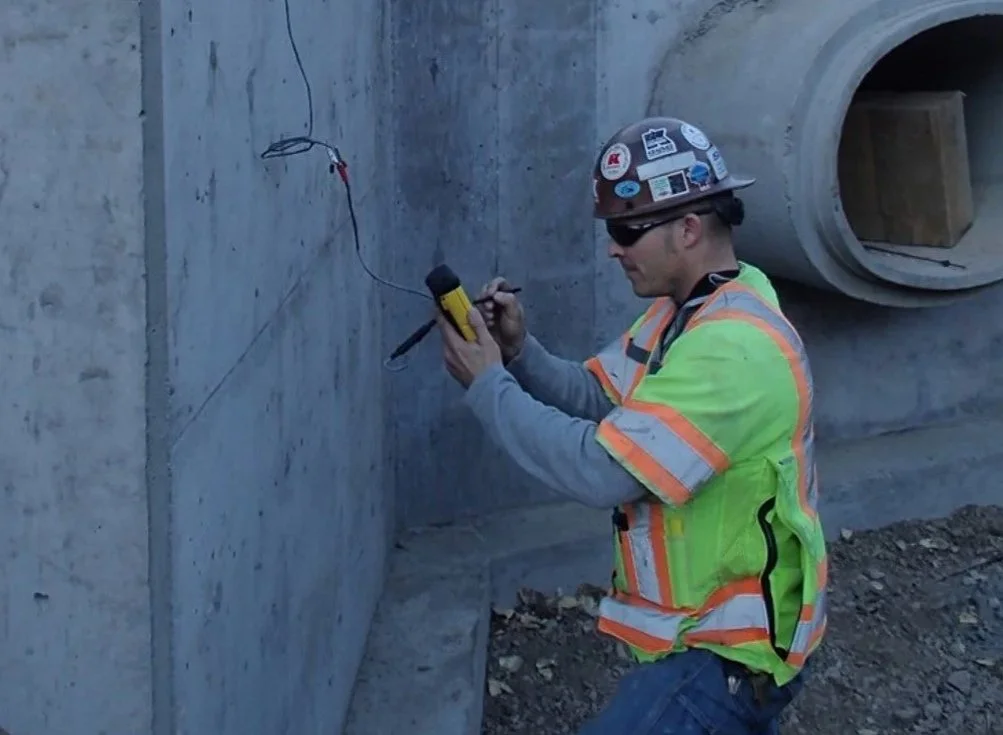
A1MI implemented thermal maturity monitoring on the program's concrete operations. Temperature sensors embedded in instrumented pours tracked actual curing conditions, and the maturity method correlated that thermal history to in-place strength development in real time — calibrated against the approved mix designs.
Strength data became continuously available rather than arriving at fixed test ages, and every instrumented pour generated a complete curing and strength development record as a byproduct of the monitoring itself.
THE OUTCOME
Project teams gained real-time in-place strength data for every instrumented pour, supporting faster, better-informed construction sequencing decisions and reducing delays waiting on scheduled cylinder breaks. At closeout, the program held a fully traceable strength development record for the instrumented work — documentation that supported final acceptance rather than requiring reconstruction after the fact.